Paintless Dent Repair vs. Body Shop: Which Is Right for Your Car?
PR
Paintless Dent Repair vs. Body Shop Repair: Stay Original
Compare paintless dent repair with body shop repair. PresiDENTial Repair explains factory paint preservation, mobile service, timelines, and trade-offs.
A dent does not automatically mean your vehicle needs new paint. When the damage qualifies, paintless dent repair can restore the existing panel while keeping the factory finish that was already there.
PresiDENTial Repair provides paintless dent repair for Phoenix-area drivers who want to preserve that originality. This comparison explains the advantages and limitations of PDR and traditional body repair, including mobile appointments, same-day repairs, cost factors, and situations that require a body shop.
Key takeaways for choosing your dent repair
- Qualifying PDR repairs retain the original panel and existing factory paint without sanding, body filler, or repainting.
- PresiDENTial Repair brings mobile service to suitable homes and workplaces across Phoenix and the West Valley.
- Many qualifying dents can be repaired the same day; extensive hail damage and complex repairs take longer.
- Traditional body repair addresses paint damage, torn metal, and collision damage beyond PDR's scope.
- PresiDENTial Repair starts with an assessment of the damage, access, paint condition, and realistic outcome.
The biggest PDR advantage: keeping your vehicle original
PDR preserves the existing panel and factory finish when the damage can be repaired without refinishing. Rather than sanding the surface and covering the dent with filler, the technician carefully reshapes the metal itself.
Your vehicle only receives its original factory paint once. A professional refinish can restore appearance, but it is still a replacement finish. If your paint remains suitable for PDR, retaining it avoids the need to recreate the color, texture, and gloss of the repaired area.
The National Alliance of Paintless Dent Repair Technicians identifies preserving original paint without grinding, filler, or primer as a central benefit of PDR.
For you, the distinction is straightforward: the dent is corrected in the panel you already own, rather than concealed beneath a new refinishing system. Preserving originality is the primary reason to consider PDR before authorizing conventional dent repair.
That advantage applies to the repaired area, not every part of the vehicle's history. PDR does not make a previously repainted vehicle factory-original again, erase collision history, or guarantee a particular resale value.
How PDR and traditional body repair work
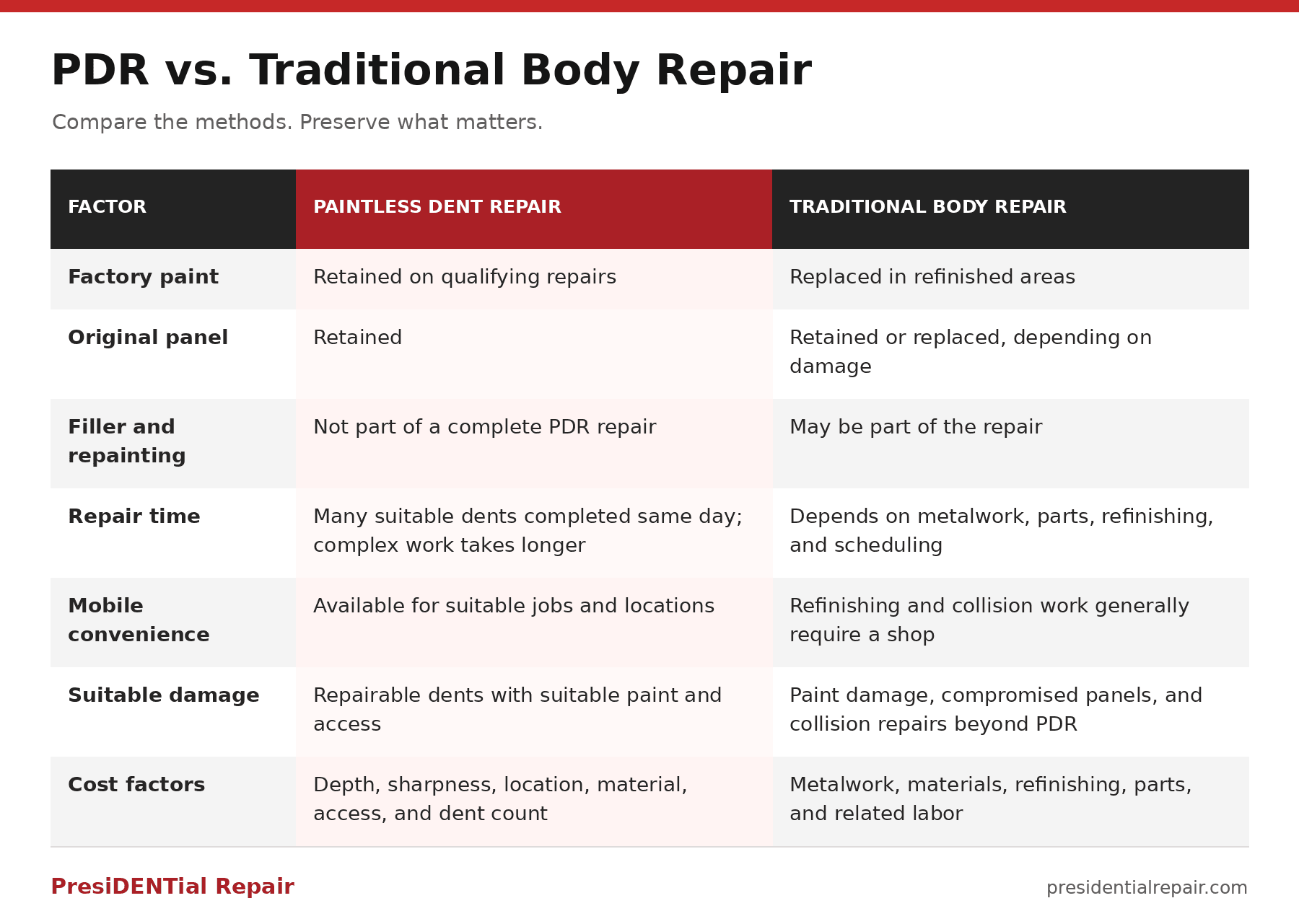
PDR reshapes metal while retaining the existing finish; conventional body repair can include metalwork, filler, refinishing, and panel replacement when needed.
Paintless dent repair
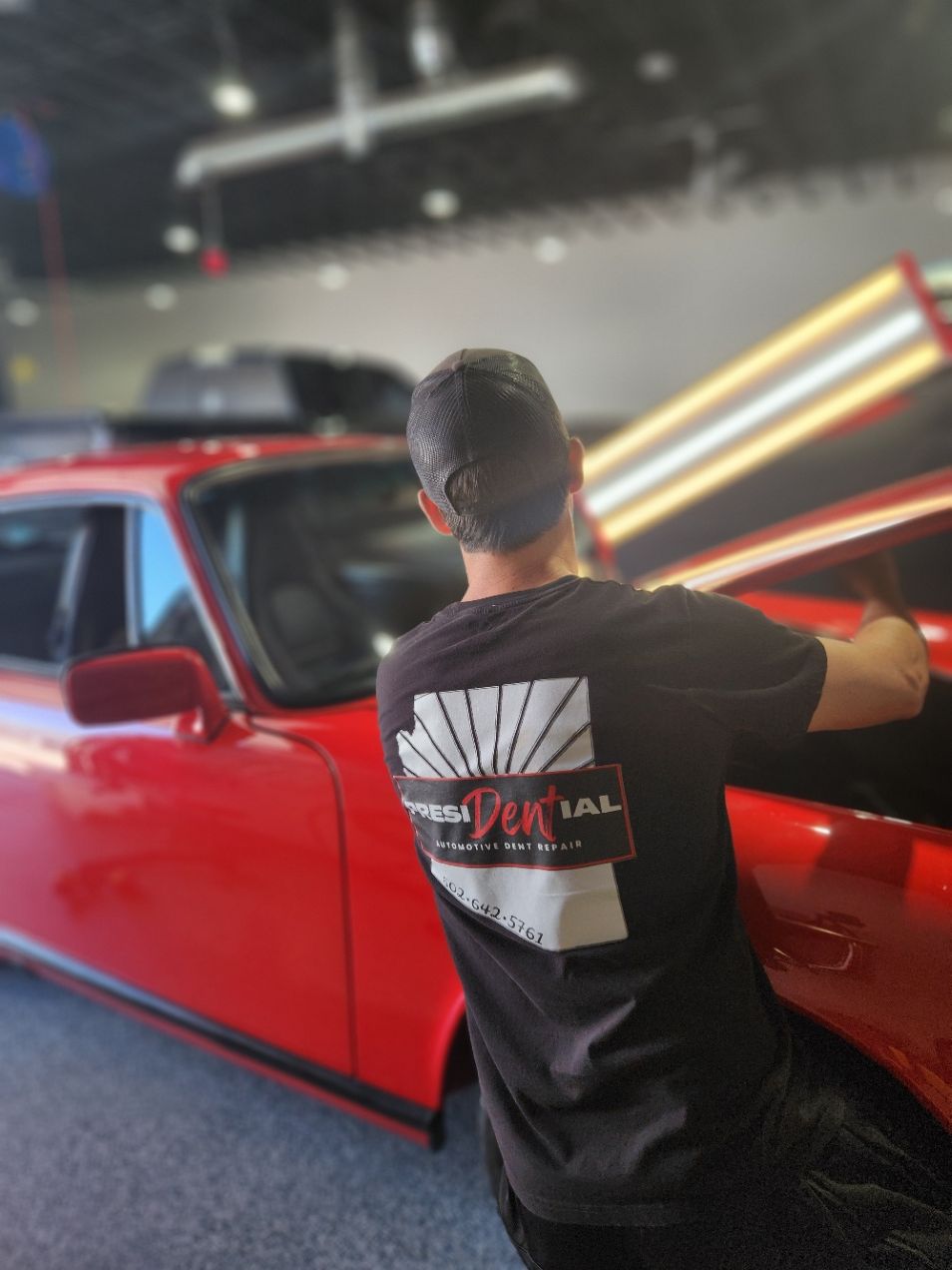
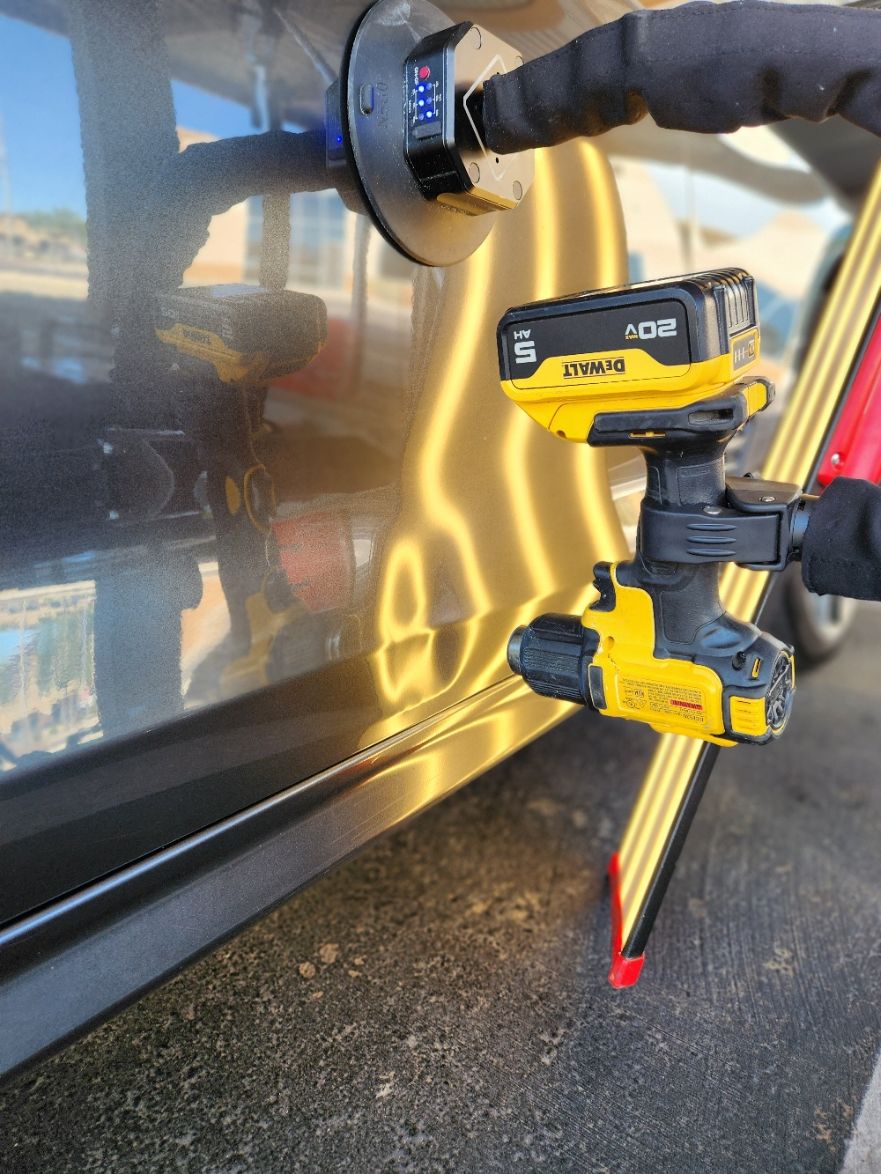
A PDR technician inspects the damage under specialized lighting and plans access to the panel. Tools work the metal from behind, while exterior glue-pulling techniques may help when backside access is restricted. Trim or other components sometimes need removal to reach the dent safely.
PresiDENTial Repair uses this process for qualifying door dings, hail damage, larger dents, creases, and aluminum panels. You can see examples in the repair gallery, including jobs that required additional panel access.
Traditional body shop repair
Conventional repair restores damage that may require more than reshaping the existing metal. Depending on the job, a body shop can straighten or replace a panel, prepare the surface, apply filler and primer where needed, and repaint or blend the finish.
Traditional repair does not always mean replacing the original panel. Many repairs retain it, but refinishing changes the paint on the repaired area. Also, some body shops offer PDR themselves: compare the proposed repair method, not just the business name.
Paintless dent repair: pros and cons
PDR offers preservation and convenience for suitable dents, but its success depends on the damage and the condition of the vehicle.
PDR advantages
- Original panel and paint: A complete qualifying PDR repair retains both without conventional filler or repainting.
- No color-matching step: Keeping the existing paint avoids introducing a newly refinished area.
- Shorter repair process: There are no primer, paint, or clear-coat application and curing stages.
- Mobile convenience: Suitable repairs can be performed where you already park.
- Potential savings: Avoiding paint materials and refinishing labor often makes PDR more economical for eligible damage.
- Fewer refinishing materials: Retaining the panel and finish avoids the paint and filler required for conventional refinishing.
PDR limitations and risks to discuss
- Paint condition matters: Cracked paint, chips, brittle finishes, repainting, or previous bodywork can change the repair plan. PDR does not replace missing paint.
- Metal has limits: Severely stretched, torn, or compromised panels may need conventional repair or replacement.
- Access affects complexity: Bracing, enclosed areas, and panel edges can restrict tools or require disassembly.
- Results depend on the damage: Some severe dents are candidates for substantial improvement rather than complete restoration.
- Technique and judgment matter: Preserving paint is the goal, not a reason to ignore repair risk. A technician should explain concerns before proceeding.
- Mobile work needs suitable conditions: Safe workspace, weather, access, and the amount of disassembly can affect where a repair is practical.
PresiDENTial Repair explains those considerations through an honest assessment. If hidden bracing, previous repairs, or paint condition changes the plan, the options should be discussed before the scope expands.
Traditional body repair: pros and cons
Traditional body repair provides the refinishing and replacement options needed when keeping the existing paint or panel is no longer practical.
Traditional repair advantages
- Paint restoration: Refinishing can address damaged or missing paint that PDR alone cannot correct.
- Severe damage repair: Conventional methods can address torn metal, crushed panels, and damage beyond practical PDR limits.
- Panel replacement: A damaged panel can be replaced when repair is unsuitable.
- Broader collision work: An appropriately equipped collision facility can evaluate structural damage and other impact-related repairs.
- Combined repair options: PDR may be used on suitable areas while other areas receive conventional repair.
Traditional repair trade-offs
- Factory finish changes: Refinished areas no longer carry their original factory paint.
- More process steps: Surface preparation, painting, curing, parts, and reassembly can extend downtime.
- Transportation planning: You may need to leave the vehicle at a shop and arrange another way to get around.
- Additional materials and labor: Refinishing and parts replacement can increase the total expense compared with eligible PDR.
- Finish matching: Color, texture, and gloss need professional matching and sometimes blending into adjacent areas.
These trade-offs do not make conventional repair poor workmanship. A properly chosen body repair can be the responsible solution when paint or collision damage demands it. The goal is to avoid unnecessary refinishing, not necessary repairs.
Mobile PDR and same-day repairs
Mobile PDR can bring qualifying dent repairs to your home or workplace, and many suitable repairs can be completed during one scheduled visit.
PresiDENTial Repair offers mobile dent repair throughout Phoenix and surrounding communities. You avoid a separate shop drop-off when your vehicle, damage, and working location are a suitable fit.
Same-day completion is possible because PDR does not require a refinishing cycle. However, same-day repair duration does not mean an immediate appointment or a guarantee that every dent will be finished that day.
Extensive hail damage, difficult access, aluminum construction, and complex metalwork can take longer. Ask for a timeline based on your actual damage, including any required removal and reinstallation work.
Location matters too. Shade, weather, safe working space, and vehicle access can determine whether a driveway or workplace is practical. Check the mobile service areas and send your location with photos before scheduling.
Which repair makes sense for your vehicle?
Start with an inspection rather than judging a dent by size alone. A large, shallow dent may be repairable with PDR, while a smaller sharp impact can present greater challenges.
Paint condition, panel material, previous repairs, edges, bracing, and metal stretch all affect the decision. PresiDENTial Repair's repair cost guide explains why two dents of the same diameter may require different amounts of work.
Ask what result is realistic, whether the existing finish can be preserved, what access is required, and how the final price will be confirmed. Photos help begin the conversation, but they do not replace an in-person inspection.
If an impact may have affected structure or other vehicle systems, a cosmetic dent repair alone is not enough. Have the wider damage evaluated rather than selecting a method solely to avoid repainting.
Frequently asked questions about PDR
Can PDR repair hail damage?
Yes, qualifying hail dents can be repaired with PDR while retaining the existing factory finish. Widespread damage may require substantial time and trim removal, so do not assume an entire hail-damaged vehicle is a same-day job. PresiDENTial Repair also helps guide customers through the insurance process.
Can large dents and sharp creases qualify?
Yes, some larger dents, body-line impacts, and creases can qualify. Size alone does not determine repairability. PresiDENTial Repair evaluates the paint, metal condition, depth, location, and access before explaining whether full restoration or substantial improvement is realistic.
Does PDR work on aluminum?
Yes, qualifying aluminum panels can be repaired with specialized PDR techniques. Aluminum responds differently from steel and may require additional time and controlled heat. PresiDENTial Repair assesses the panel construction and damage before confirming the approach.
Will PDR repair chipped or cracked paint?
No, PDR does not replace missing paint or repair a cracked finish. Paint damage can change the recommended approach, even if the metal can be improved. A complete cosmetic repair may require refinishing or a combination of methods.
Is a PDR repair permanent?
A properly completed PDR repair is permanent: the metal is reshaped rather than covered with filler. That does not protect the panel from future impacts. Repair expectations should still reflect the condition of the metal and the achievable result.
Does keeping factory paint guarantee resale value?
No repair method guarantees a resale price. PDR preserves the original finish on qualifying panels, which matters to owners who value originality. Vehicle condition, damage history, mileage, and the wider market still influence value; PDR does not erase the vehicle's history.
Preserve what is original whenever the damage allows
PDR deserves consideration first when the dent can be repaired while retaining the existing panel and factory paint. Mobile service and same-day completion for many qualifying jobs add convenience, but preserving originality remains the central benefit.
PresiDENTial Repair brings professional PDR to suitable locations across Phoenix and the West Valley. Every job starts with an assessment of what can be achieved responsibly, including when another repair method makes more sense.
To get started, text photos to 602-642-5761 or request an evaluation. Include several angles of the damage, your vehicle's year, make and model, and your location. The final repair plan and price are confirmed after an in-person inspection.